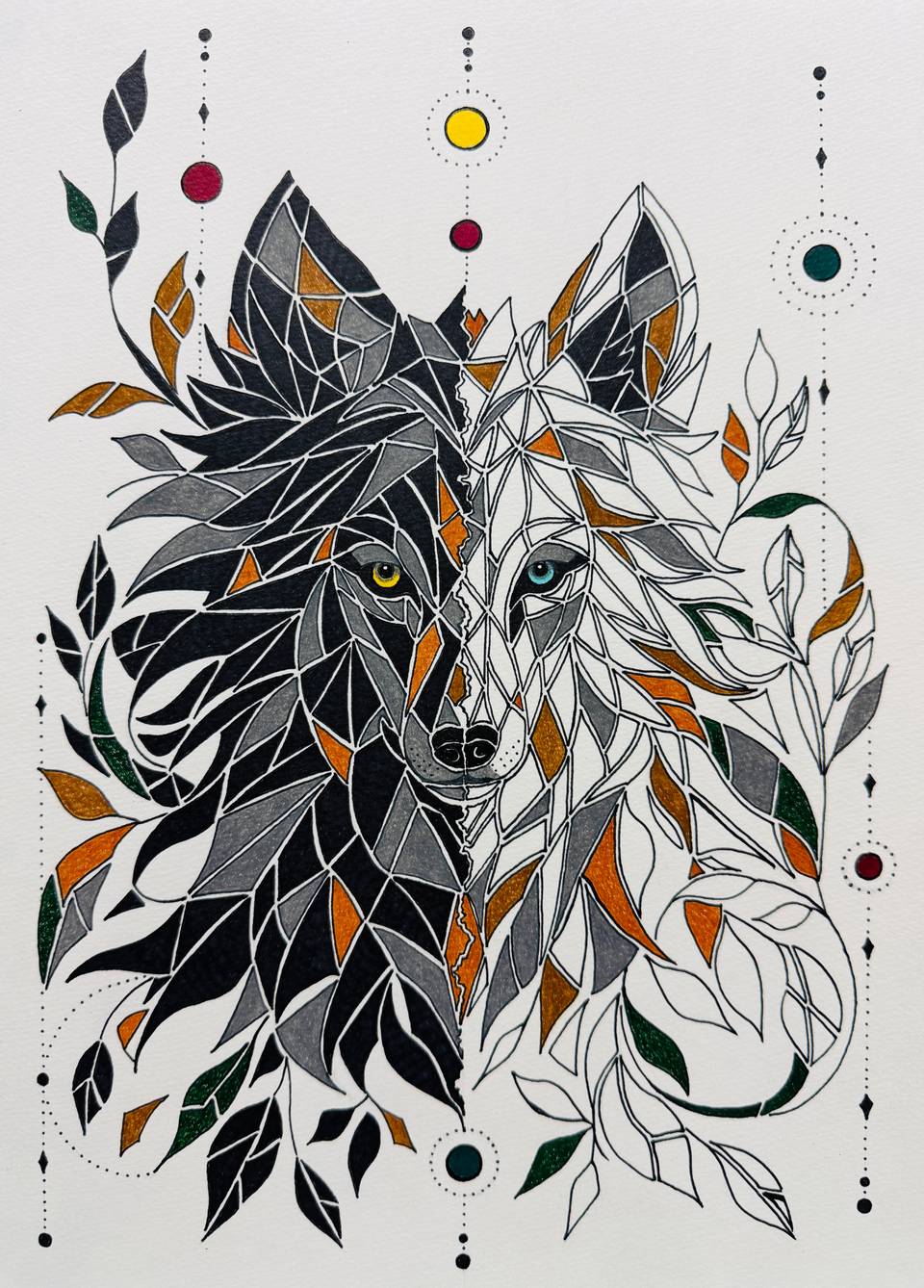
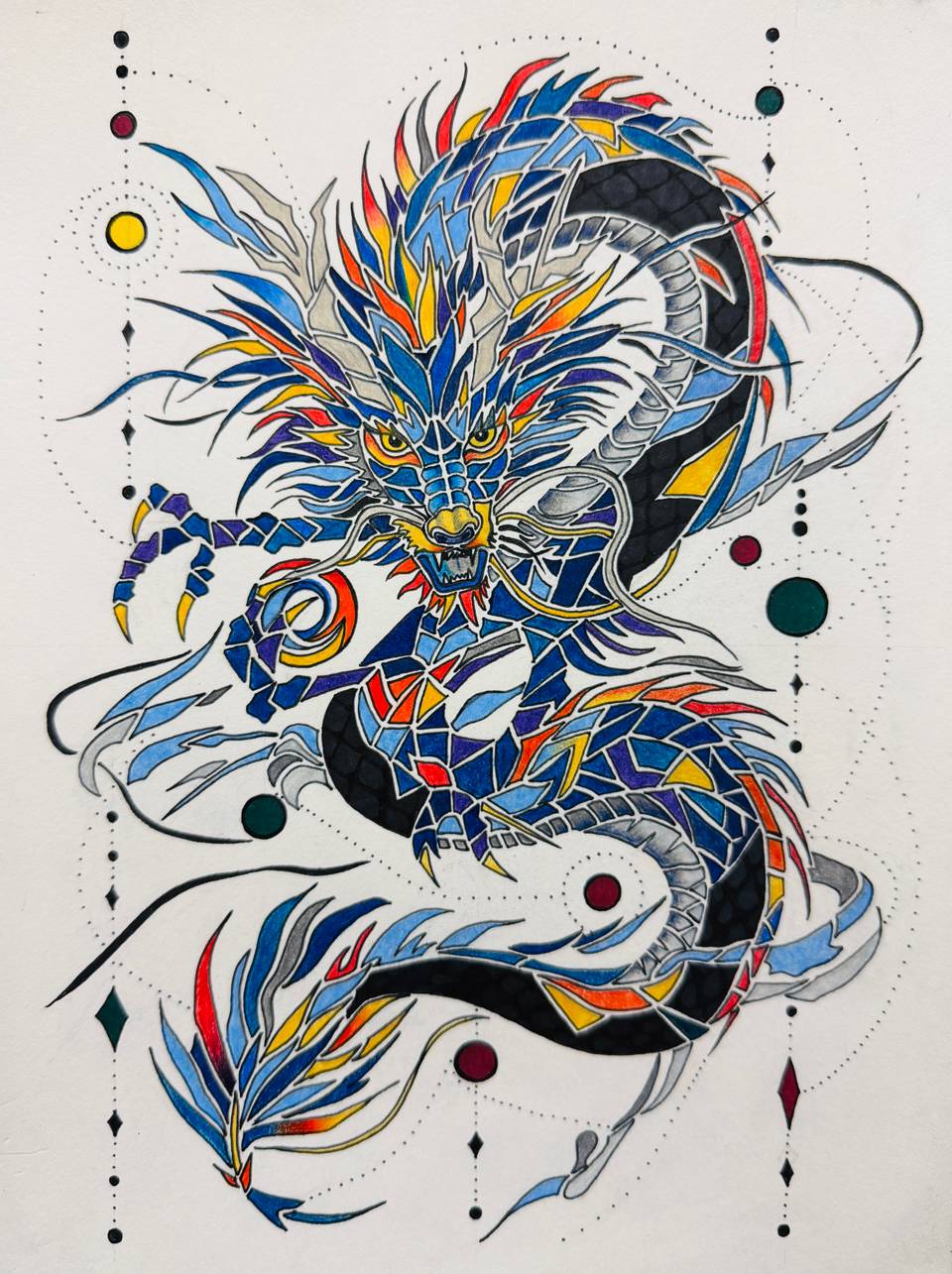
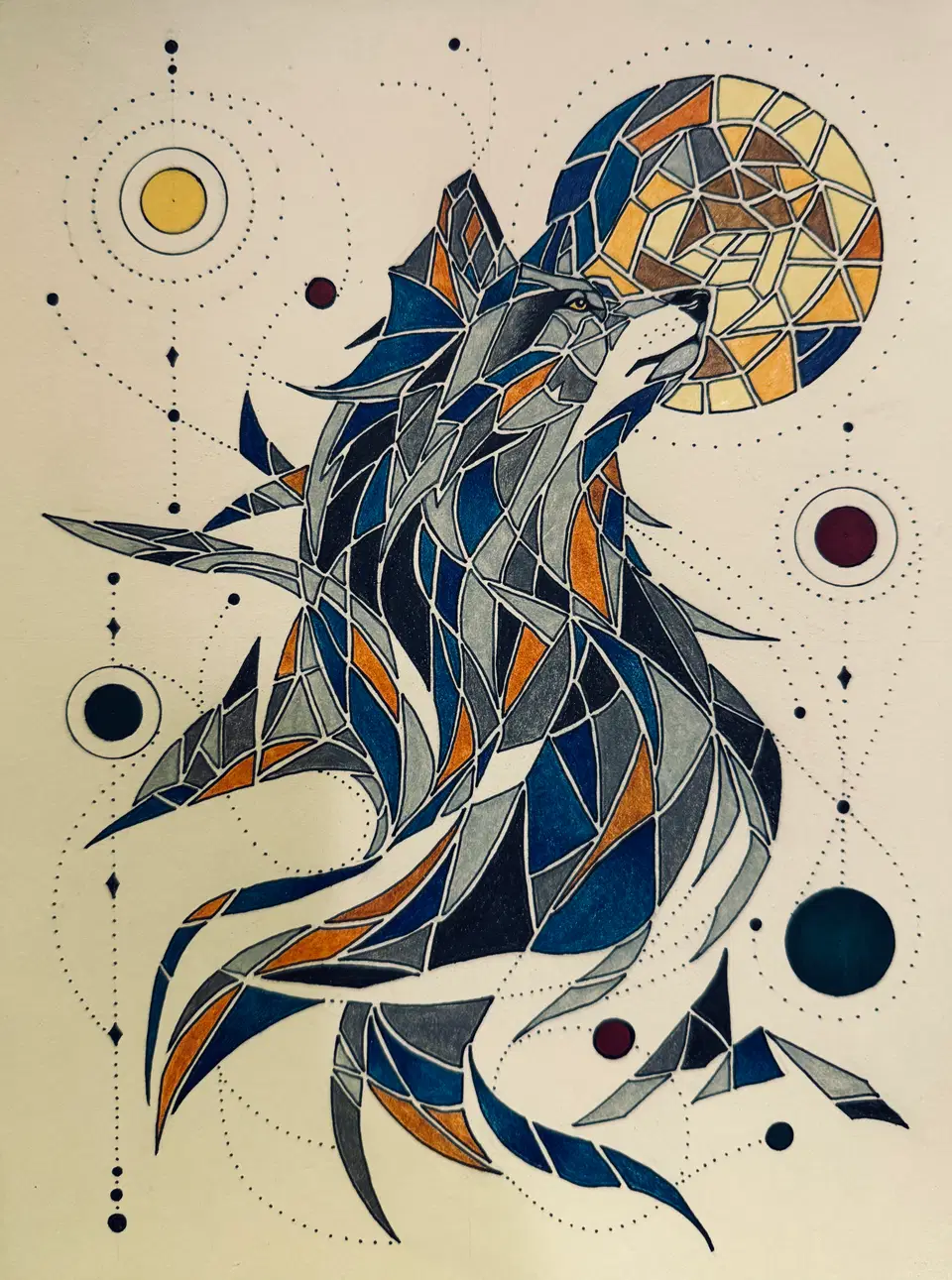
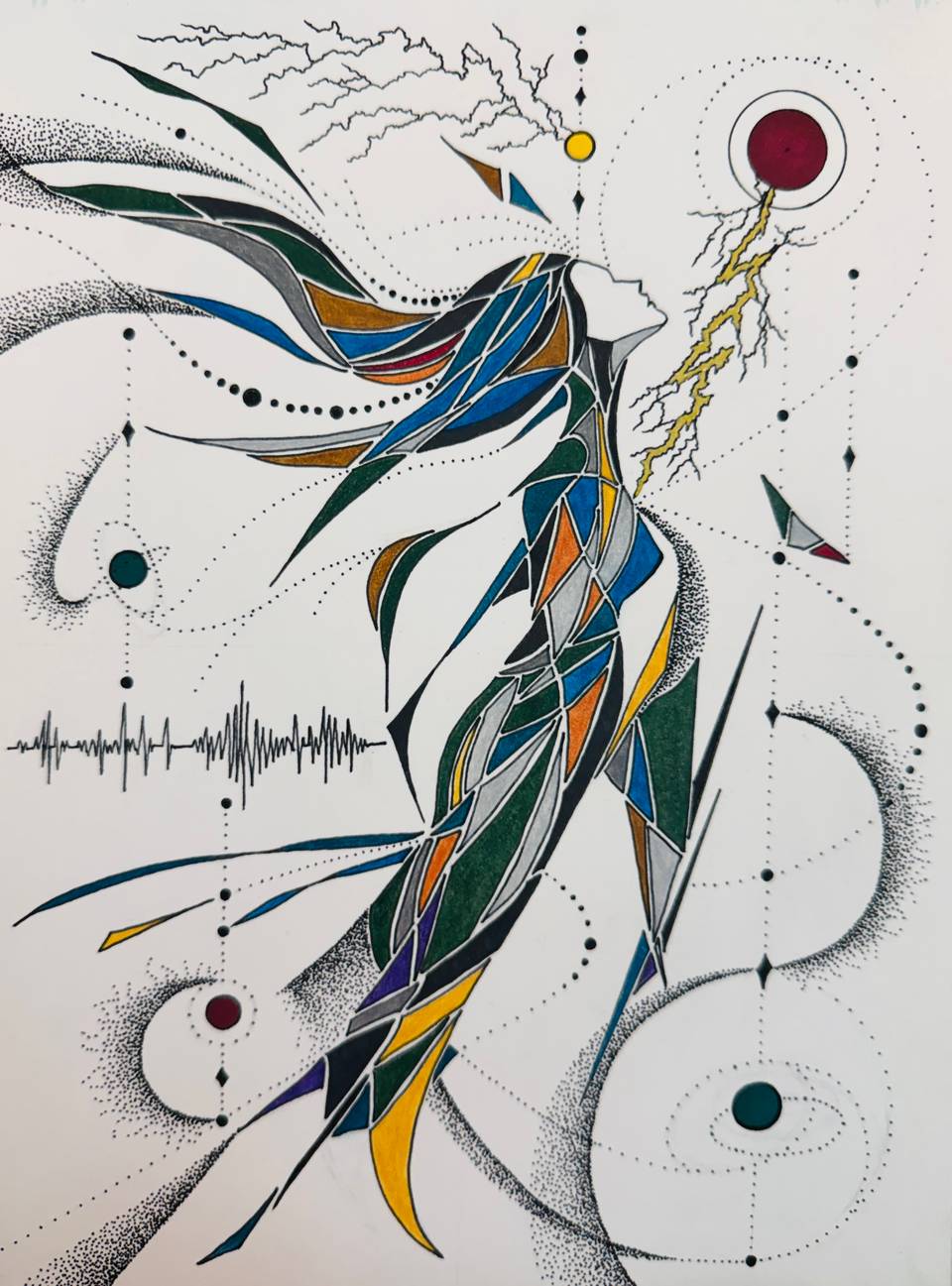
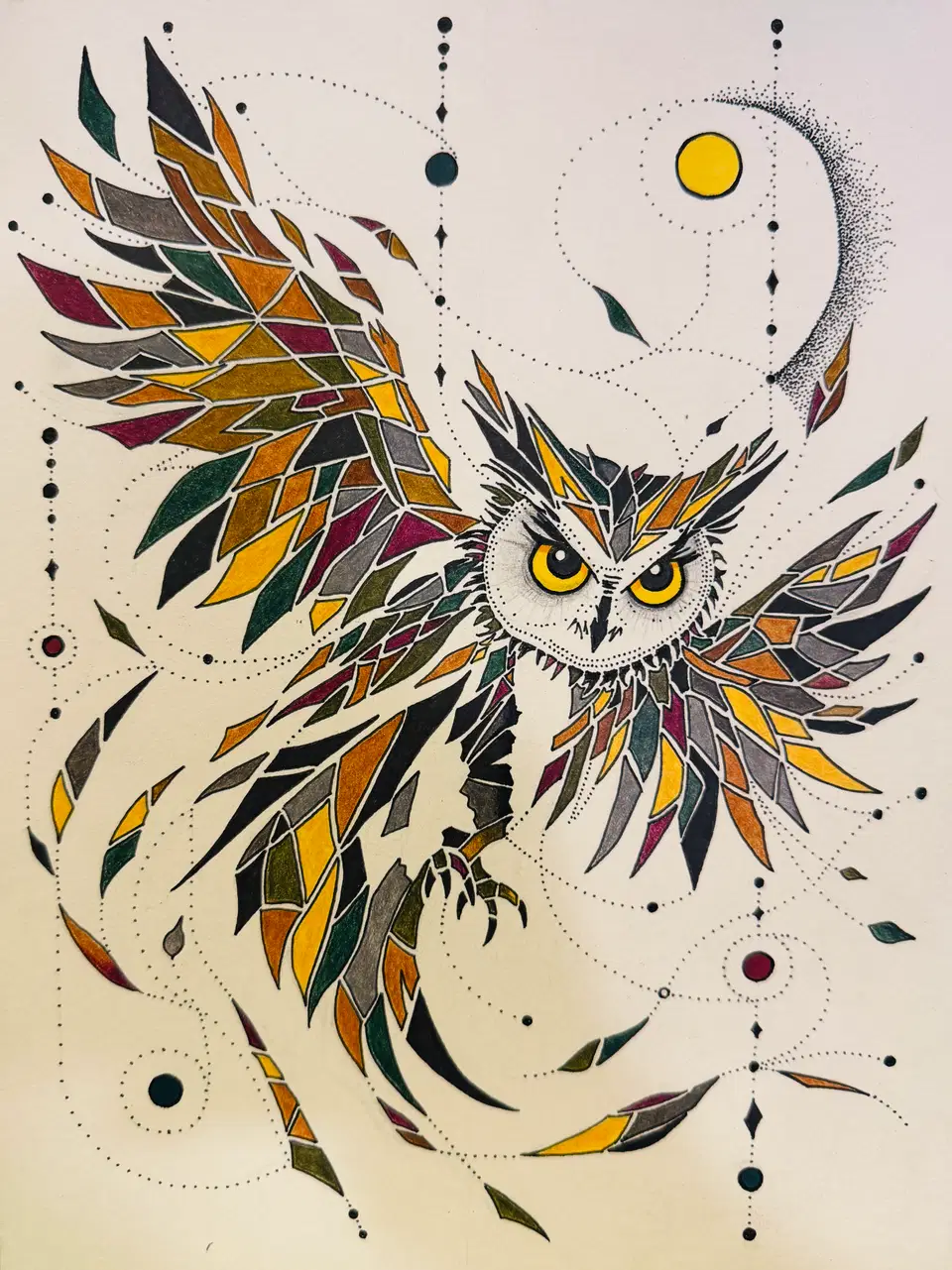
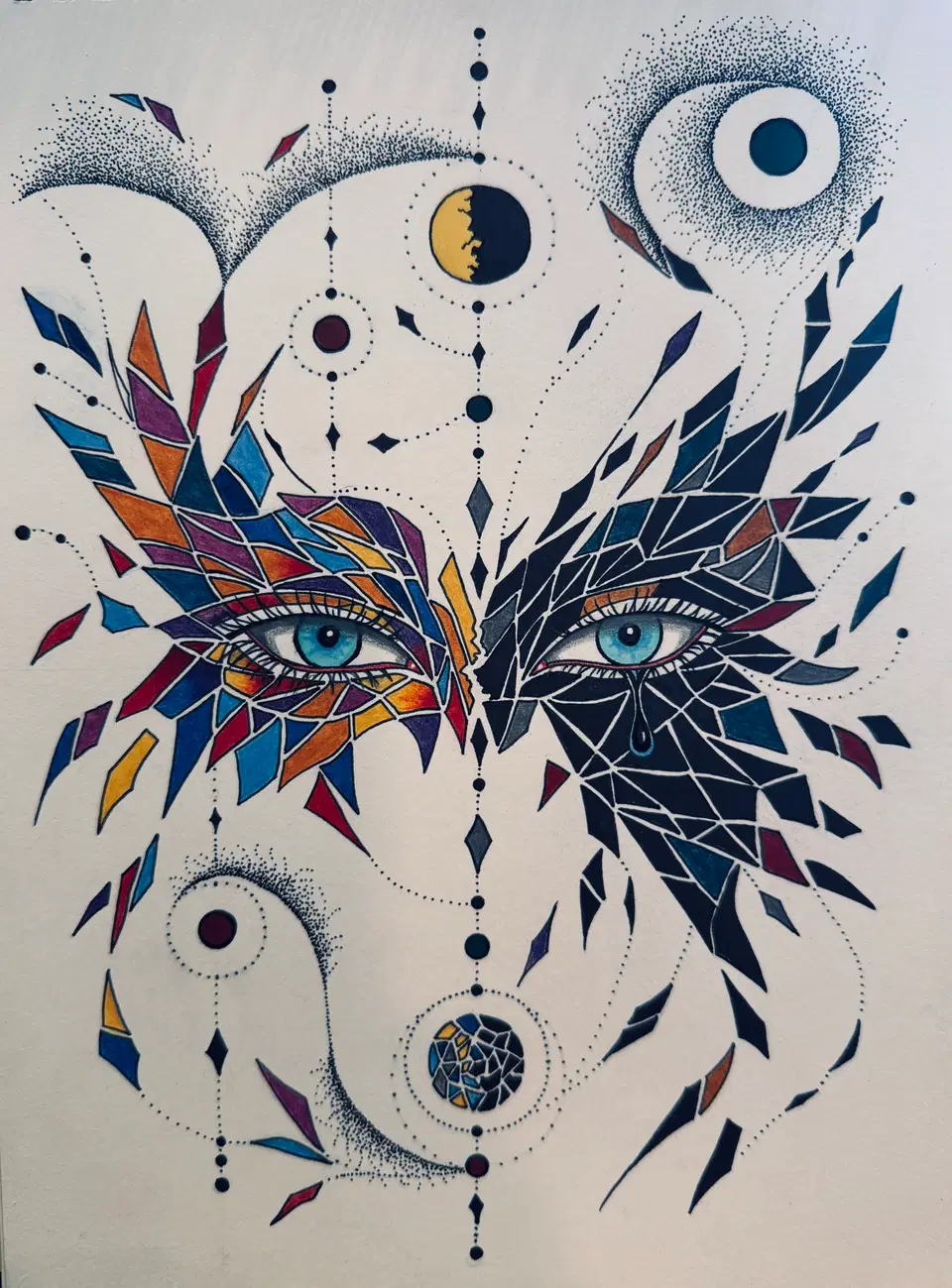
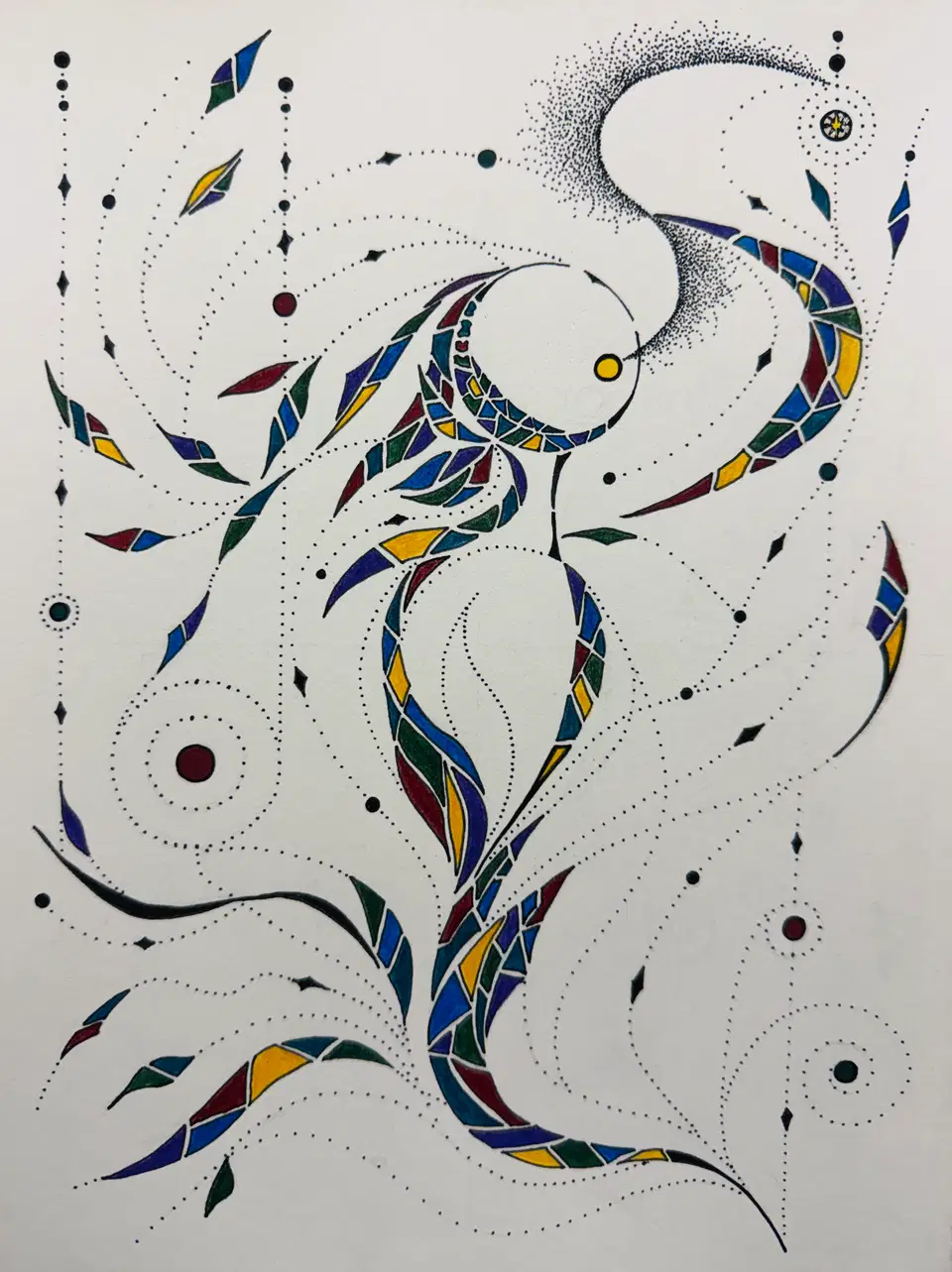
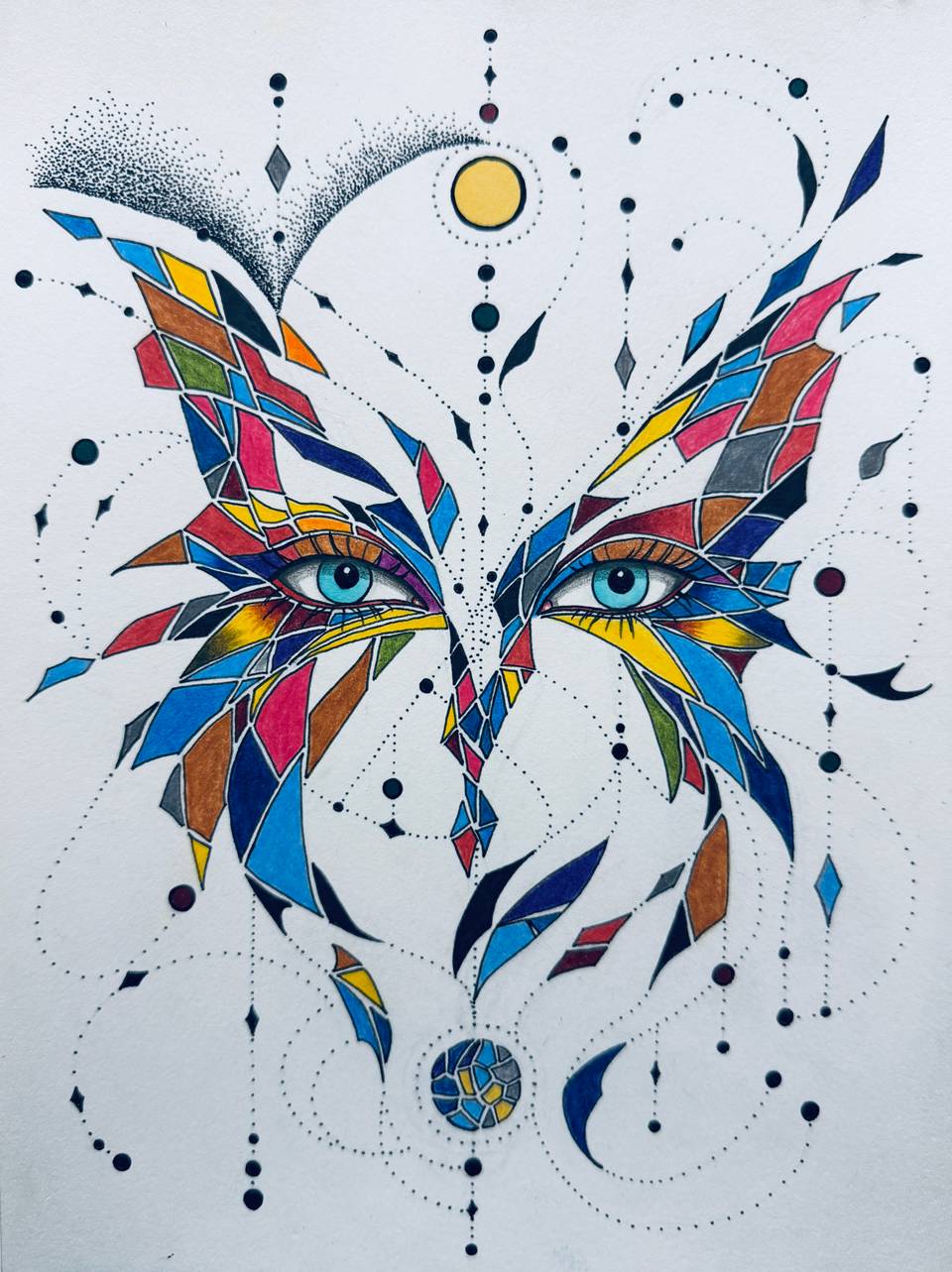
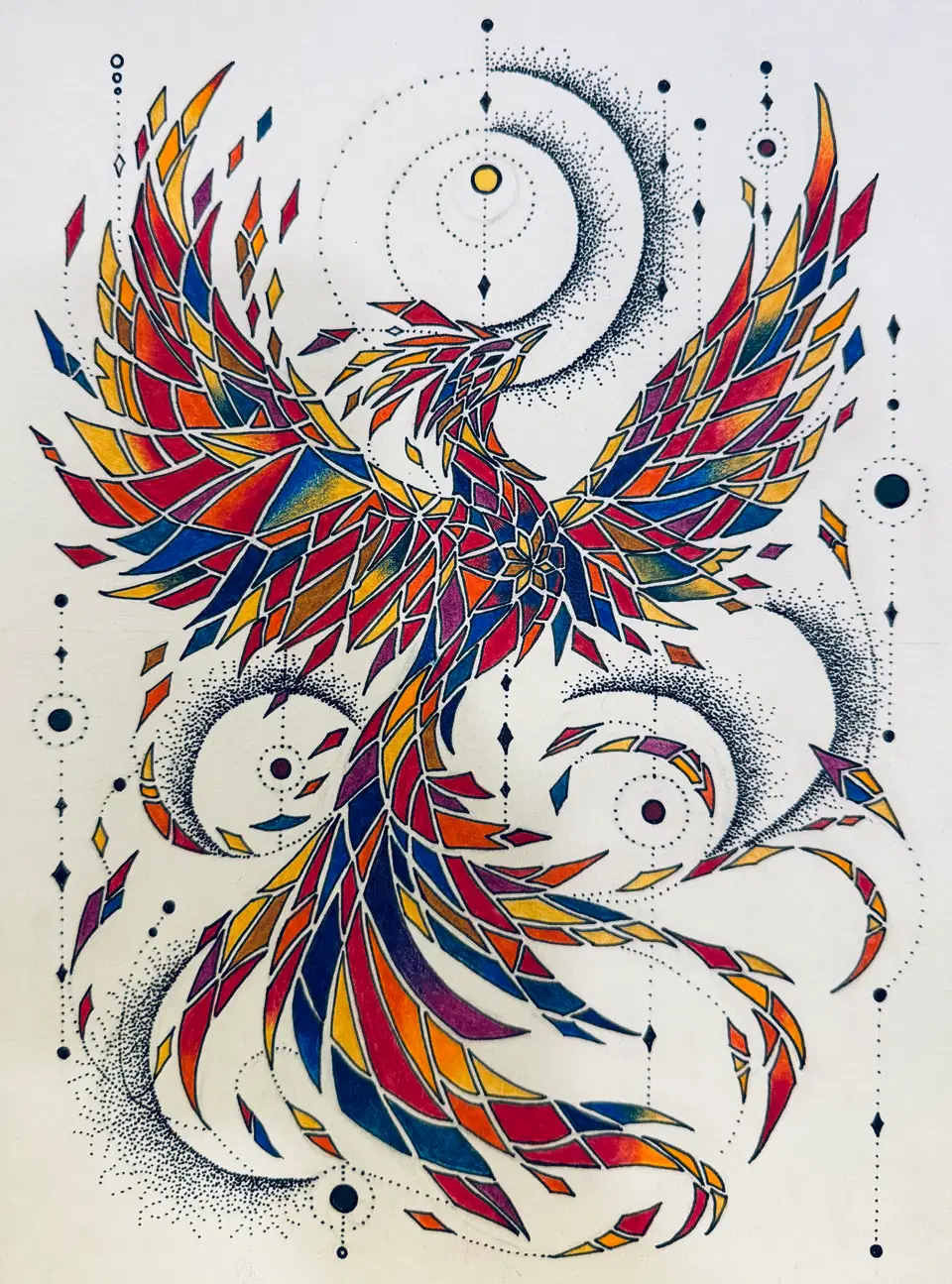
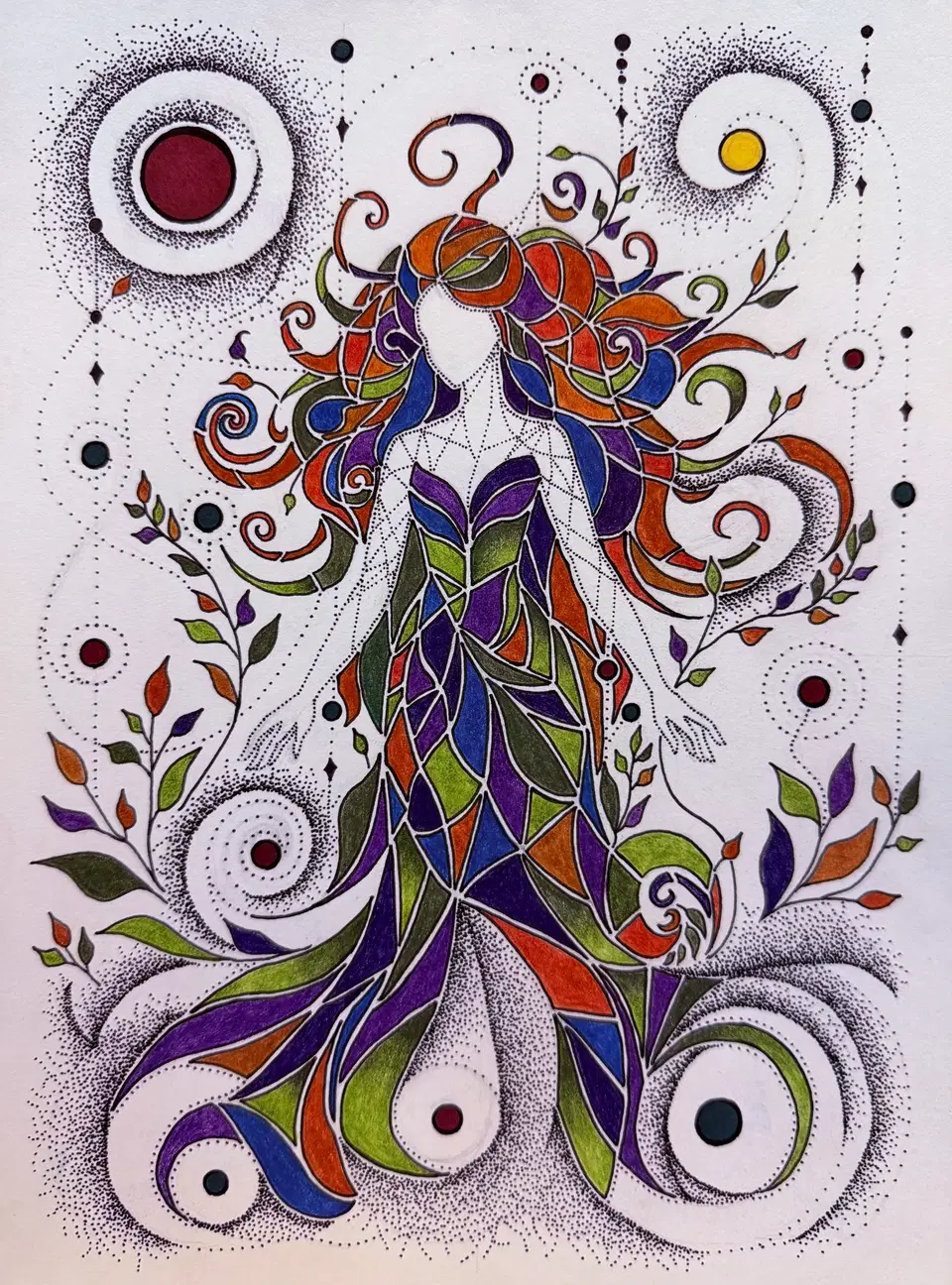
Translate장승훈 작가의 작업은 하나의 형상을 수많은 조각으로 나누고 다시 연결하는 과정에서 시작된다. 인물과 동물, 자연의 형상은 다각형의 색면으로 해체되지만 흩어지지 않고 하나의 존재로 다시 결집한다. 그 사이를 유영하는 점과 곡선은 형상의 안과 밖을 넘나들며 화면 전체에 지속적인 움직임을 만든다. 이처럼 분절과 연결, 밀도와 여백, 기하학적 질서와 유기적 흐름의 공존은 장승훈의 작업을 이루는 핵심적인 조형 방식이다.
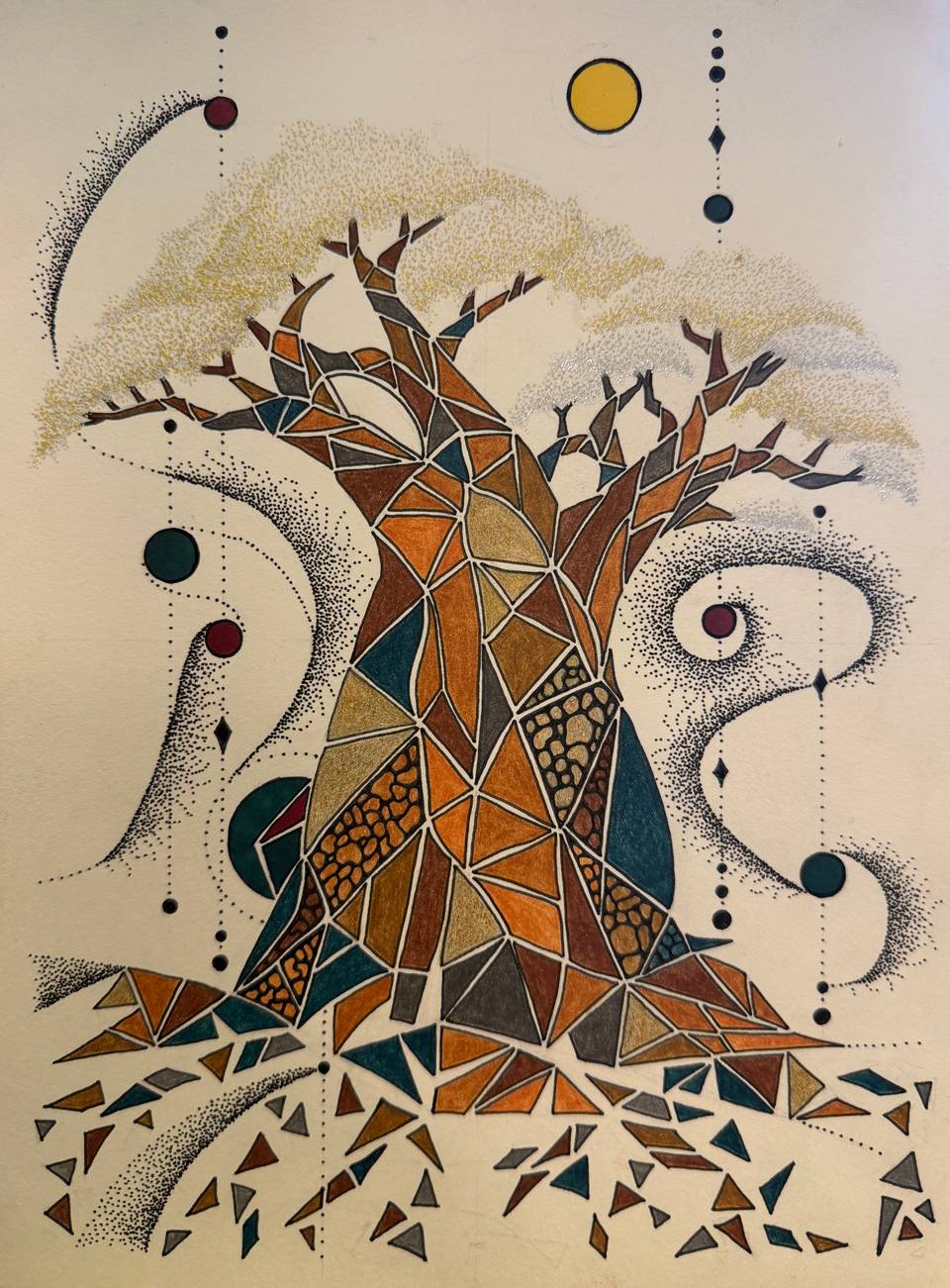
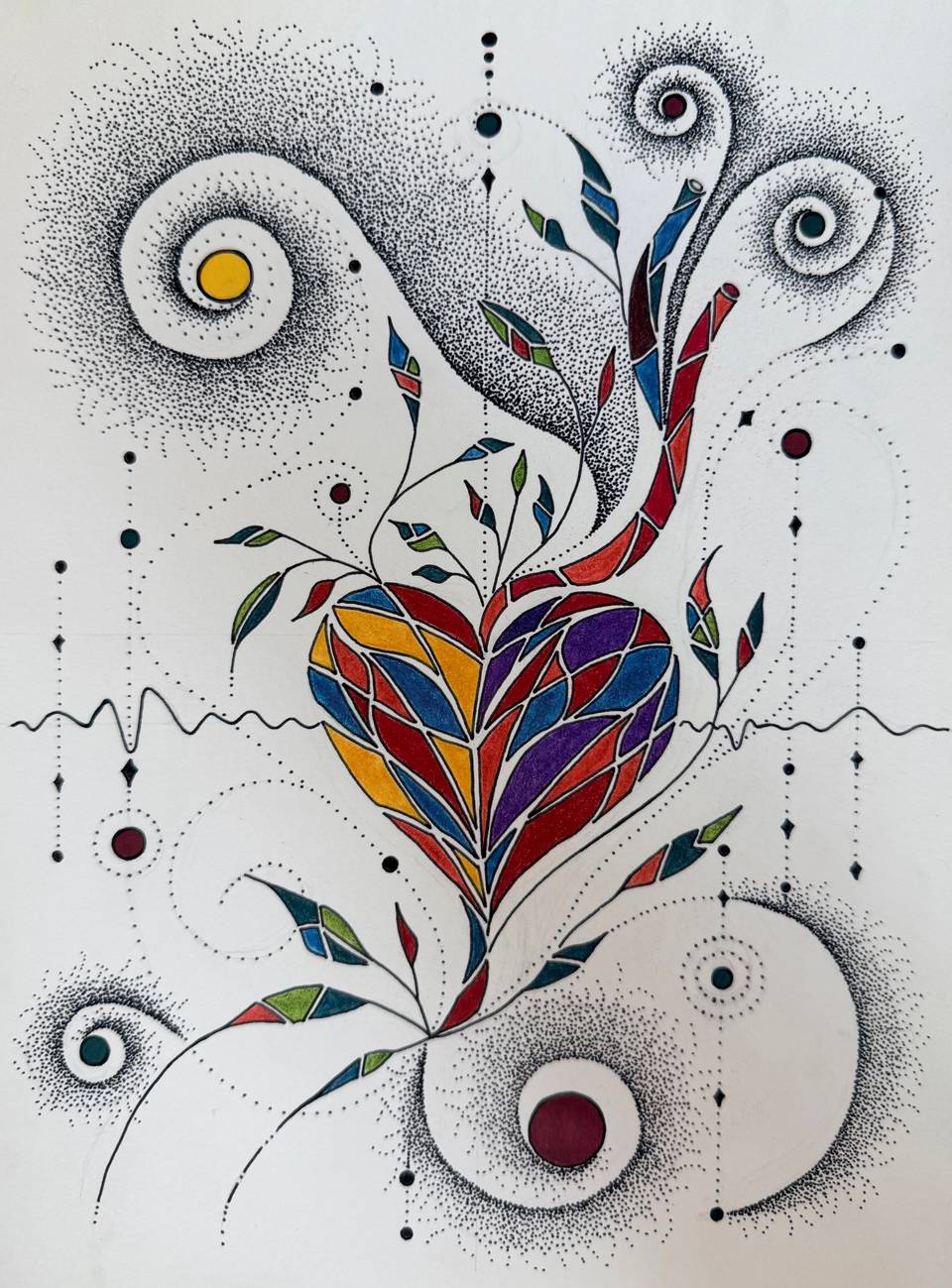
특히 그의 화면에서 여백은 형상을 둘러싼 배경이 아니라 작품의 리듬을 결정하는 적극적인 공간으로 기능한다. 촘촘한 점묘가 응축되었다가 흩어지고, 색의 파편과 선이 여백을 가로질러 다시 연결되면서 정지된 형상에도 팽창하고 순환하는 듯한 감각을 부여한다. 장승훈은 이러한 시각적 리듬을 통해 눈에 보이지 않는 숨과 에너지, 생명의 움직임을 가시화한다. 완결된 하나의 형상보다 조각들이 모이고 흩어지는 과정에 주목함으로써, 그의 화면은 고정된 존재보다 끊임없이 변화하는 상태를 보여준다.written by ARTISTY, ⓒ ARTISTY Inc.
Seunghoon Jang’s work begins with the process of breaking a single form into numerous fragments and reconnecting them. Figures, animals, and forms drawn from nature are deconstructed into polygonal fields of color, yet rather than dispersing, they come together again as a unified presence. Dots and curving lines move between and around these forms, creating a continuous sense of motion across the composition. This interplay of fragmentation and connection, density and negative space, geometric order and organic flow forms the core of Jang’s visual language.
In his work, negative space is not simply a background surrounding the subject, but an active element that shapes the rhythm of the composition. Dense clusters of dots gather and disperse, while fragments of color and lines travel across open space, giving even static forms a sense of expansion and circulation. Through this visual rhythm, Jang gives form to the invisible movements of breath, energy, and life. By focusing on the process through which fragments gather and disperse rather than on a fixed, complete form, his work presents existence as something in a constant state of change.