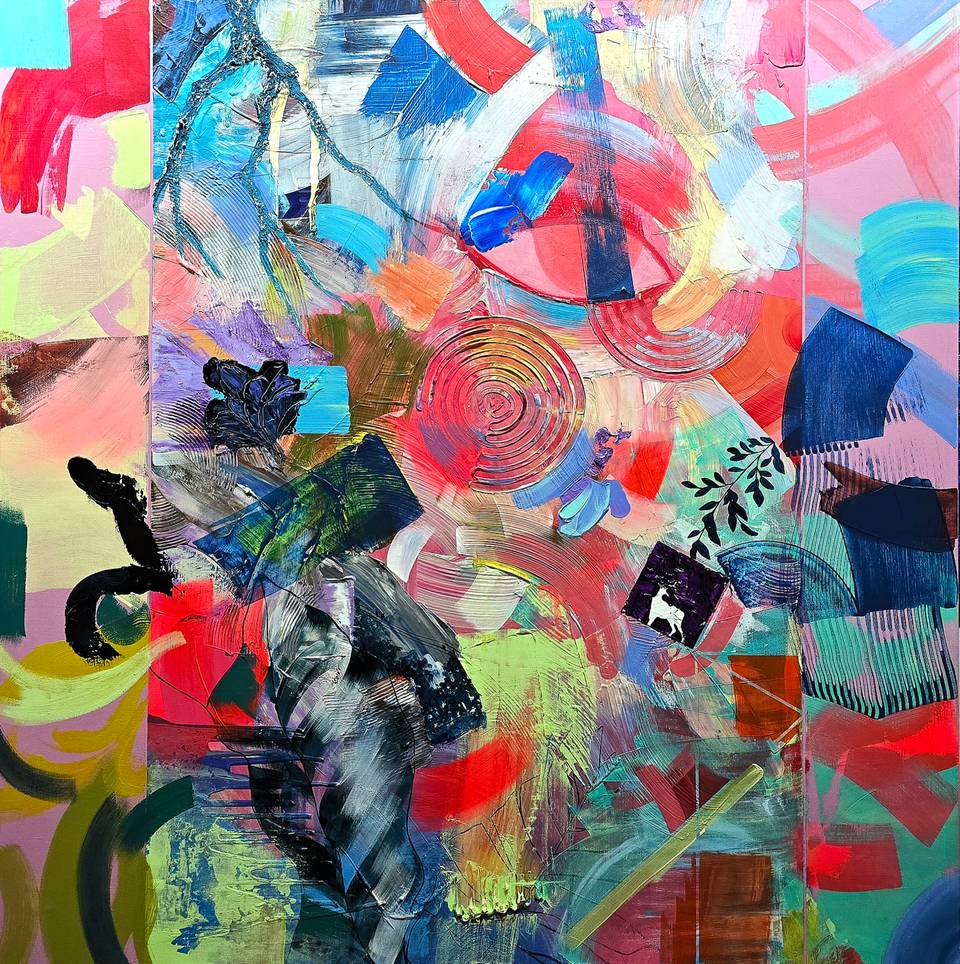
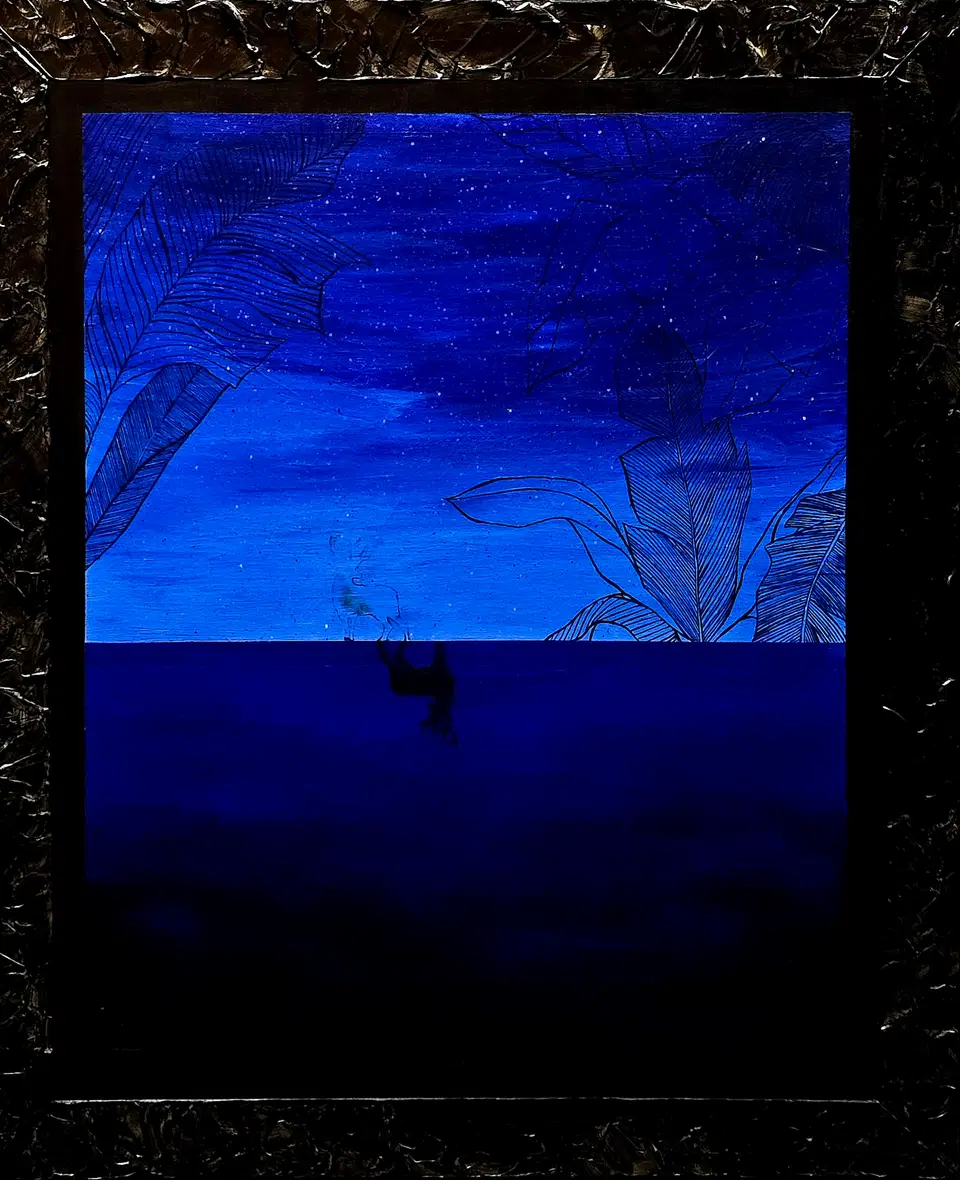
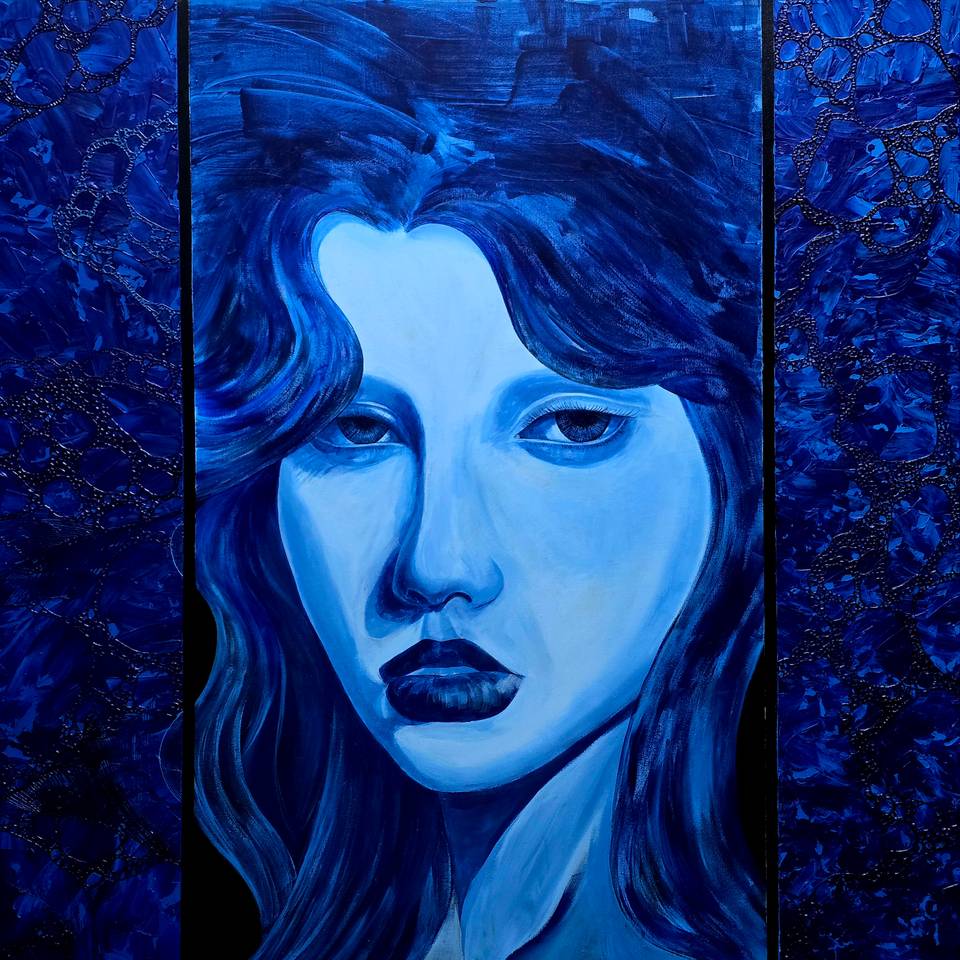
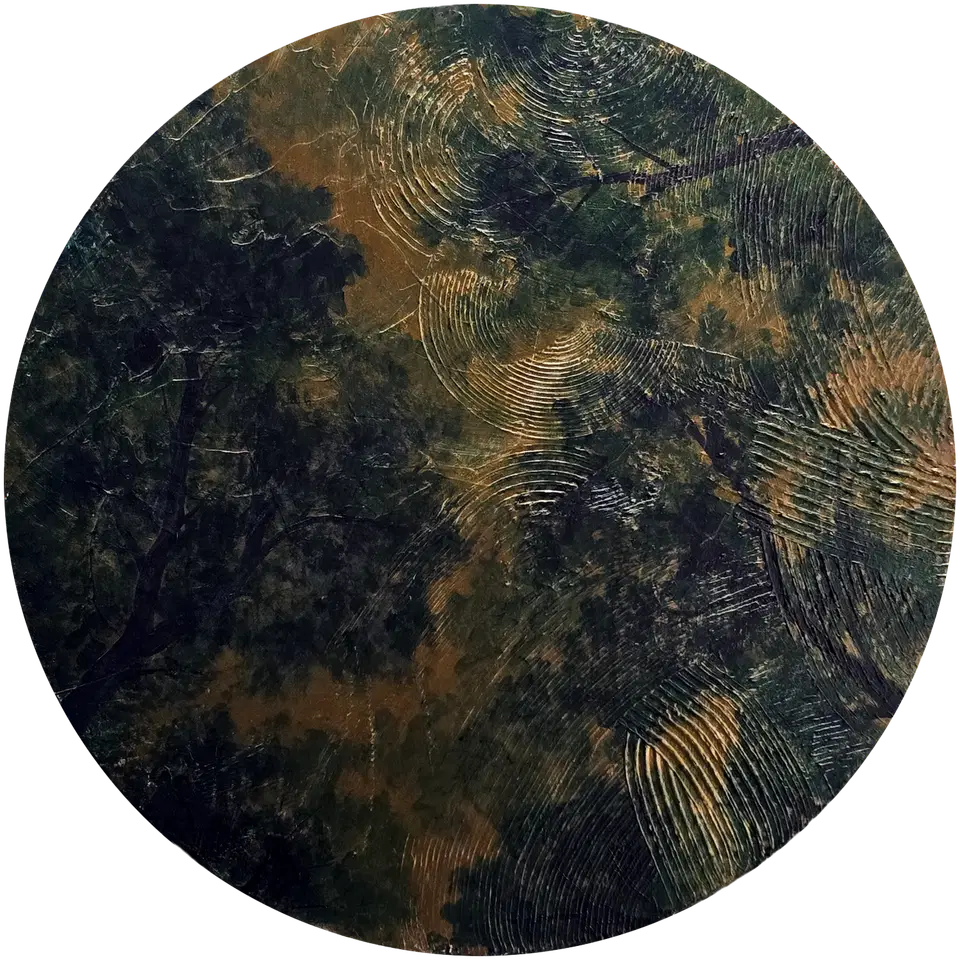
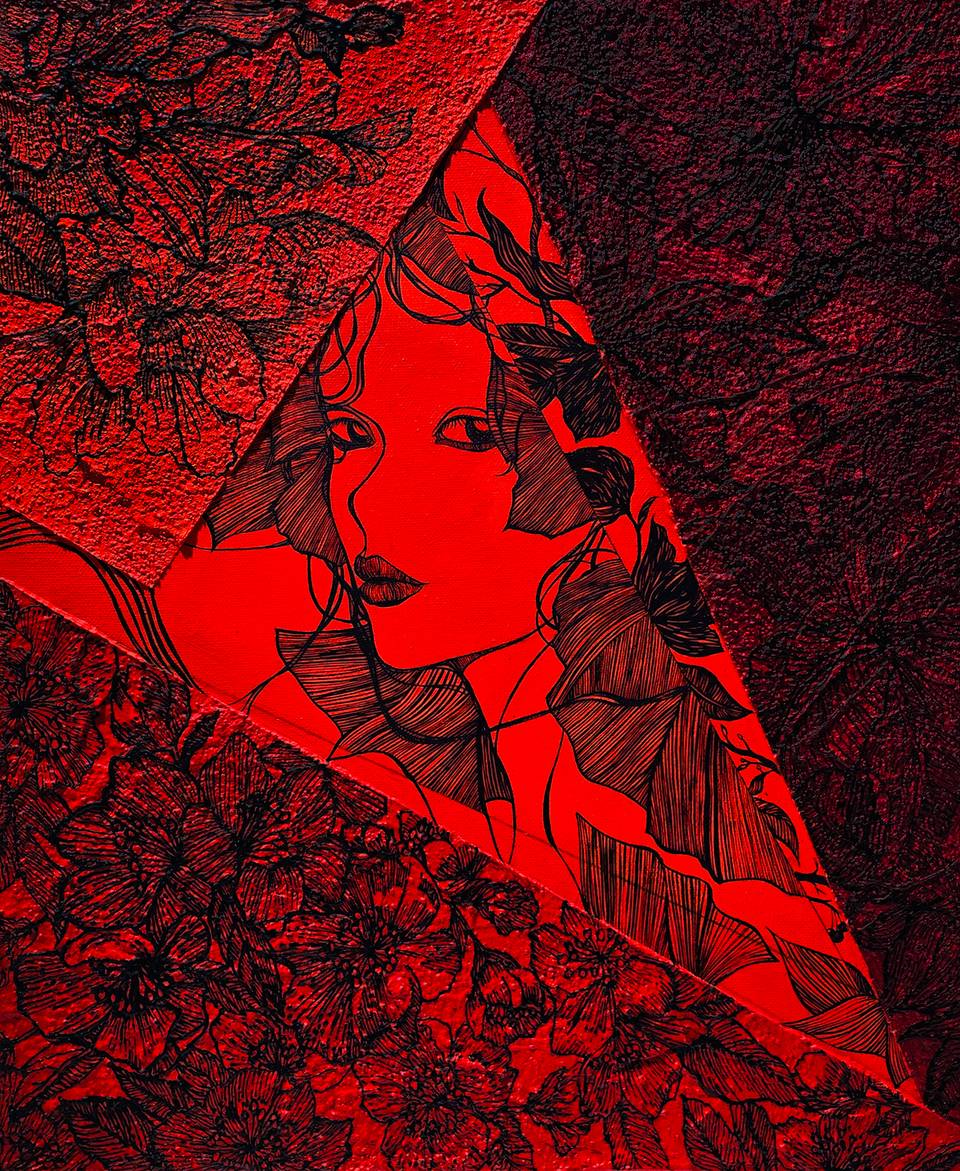
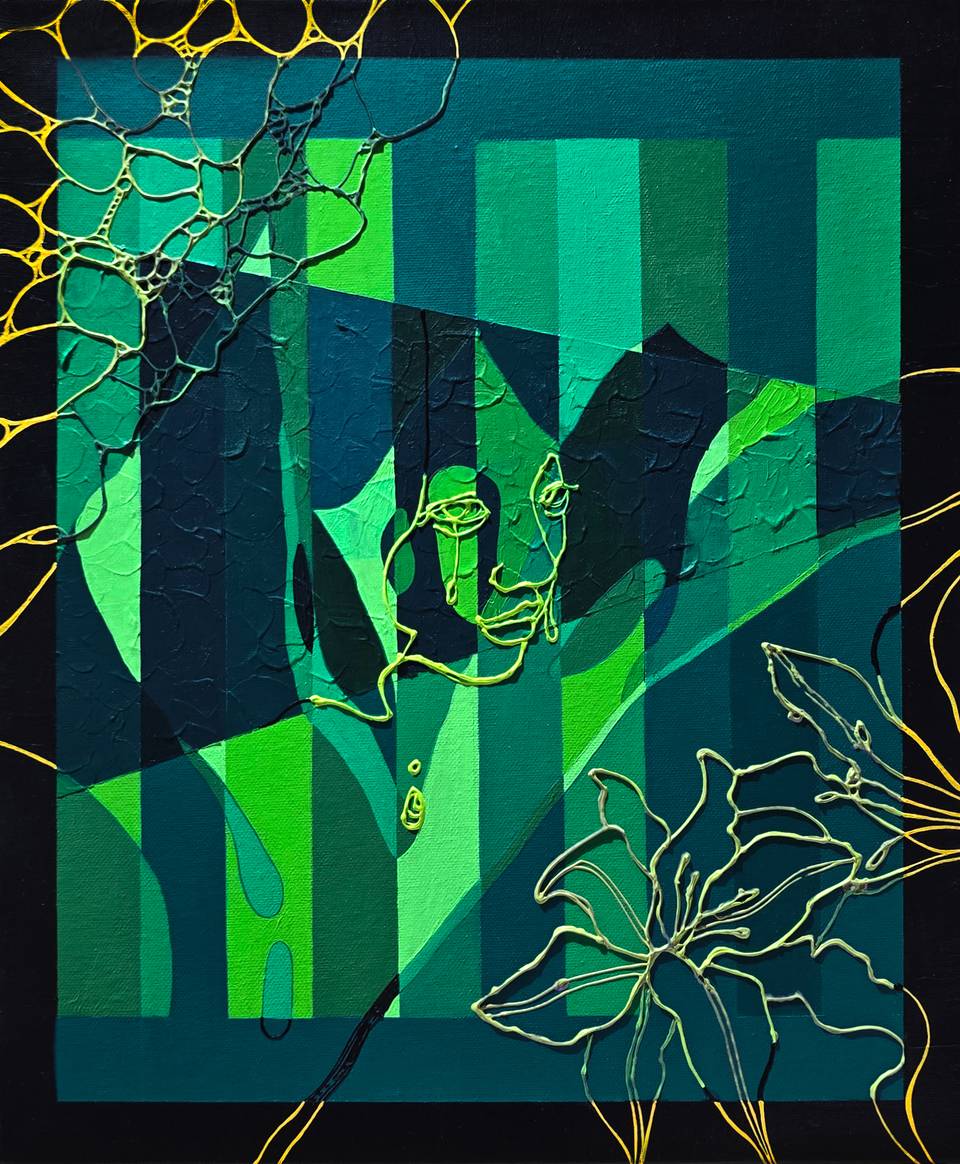
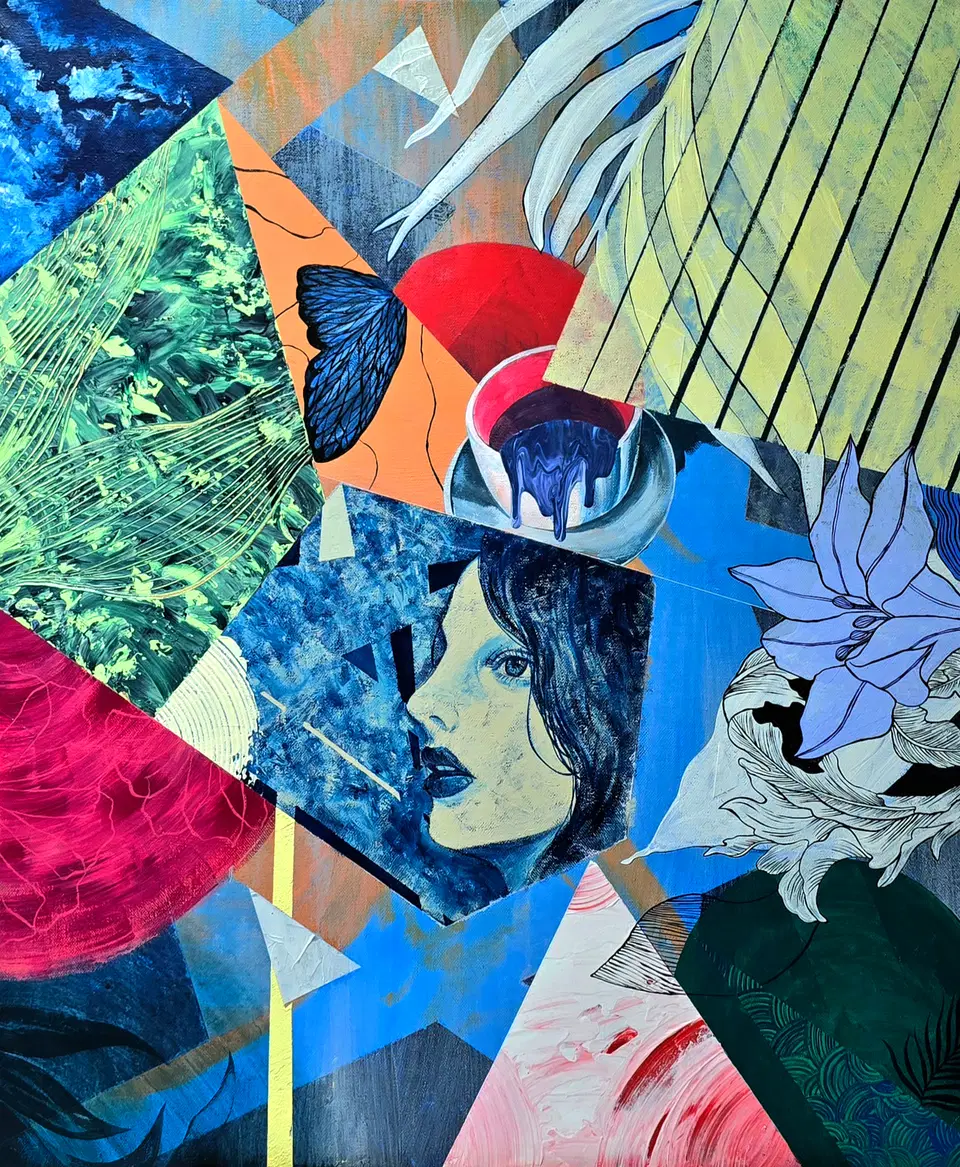
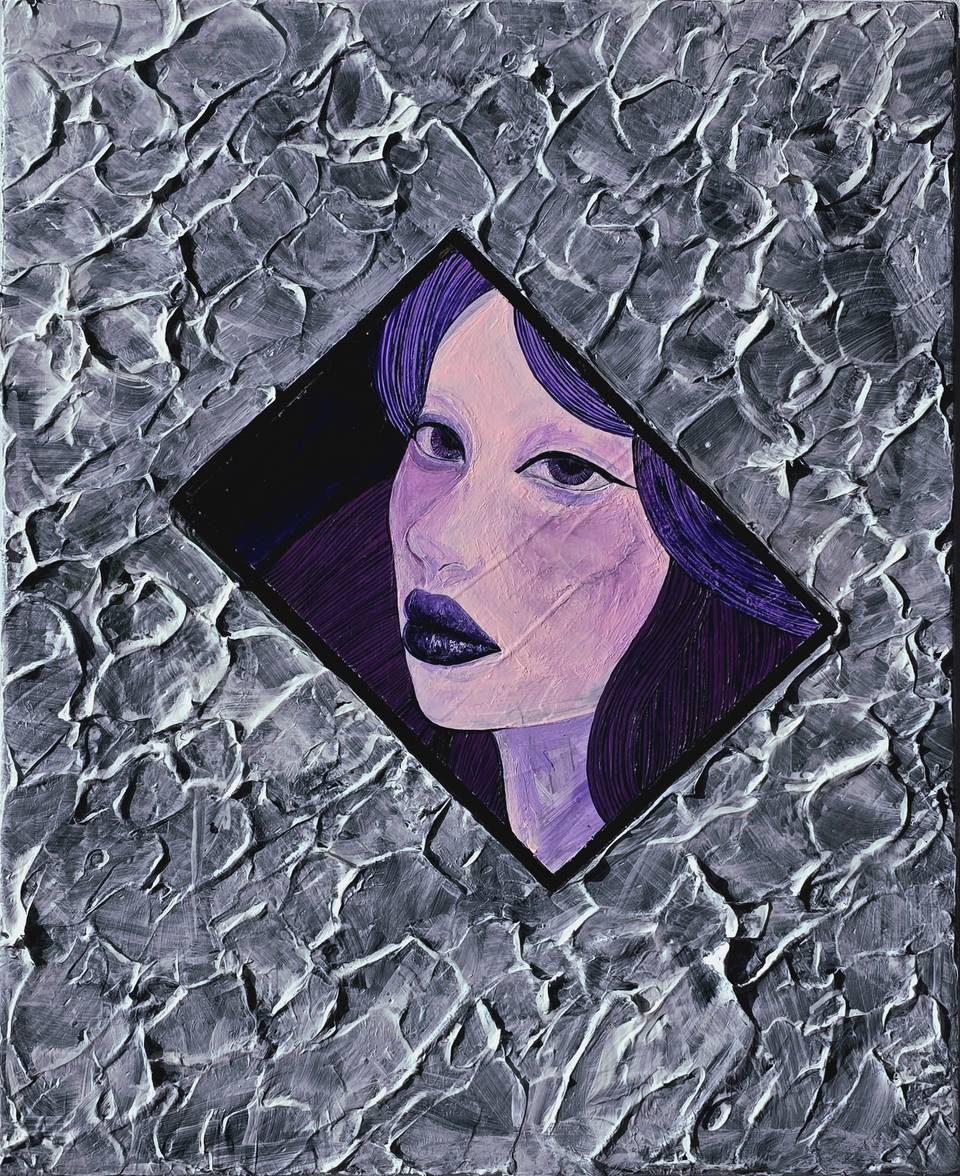
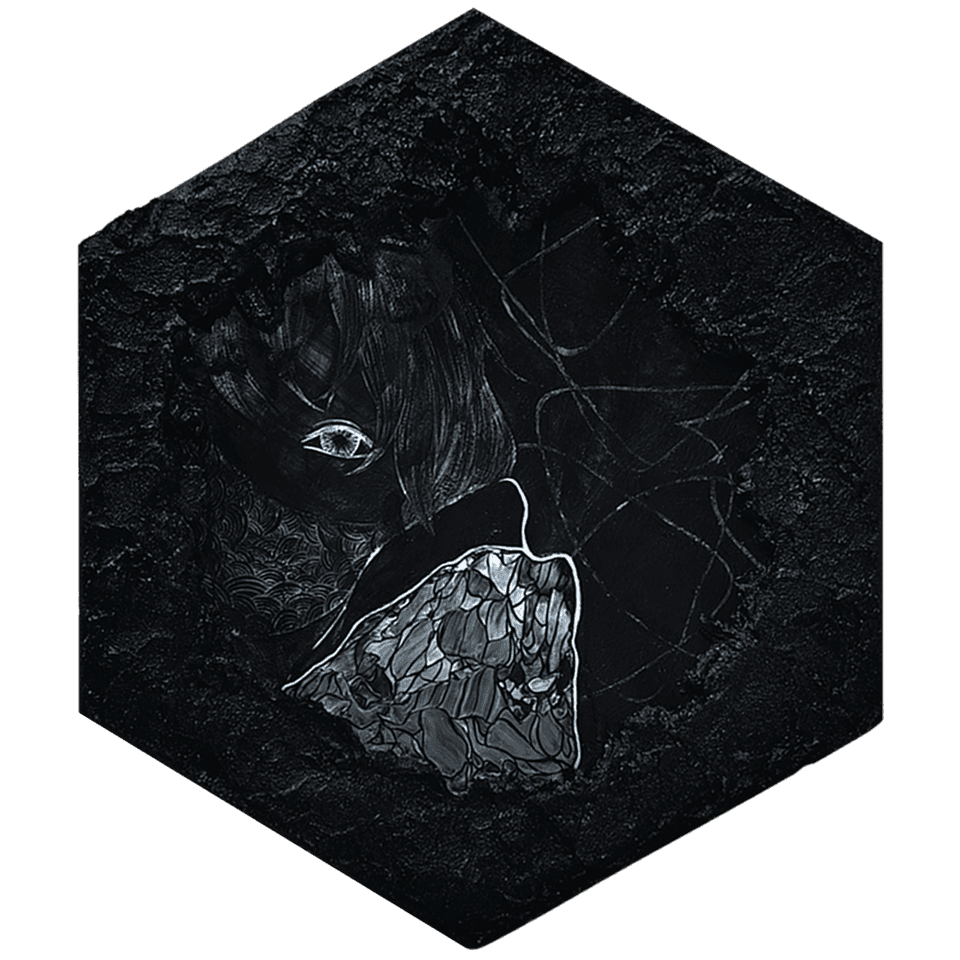
Translate김령아 작가의 작업은 ‘낯섦’이 남긴 심리적 흔적을 상상으로 재구성된 공간 안에서 다시 다루게 만든다. 여기서 환상은 현실의 반대라기보다, 감정을 견딜 수 있는 형태로 전환하는 장치에 가깝다. 반복적으로 등장하는 소녀의 얼굴은 단일한 자아의 초상이기보다, 불안과 방어, 호기심과 욕망 같은 서로 다른 감정 상태가 교차하며 드러나는 심리적 아바타처럼 기능한다. 관객은 동화적이고 친숙한 이미지에 먼저 이끌리지만, 곧 그 표면이 완전히 편안하지만은 않다는 미묘한 감각을 인지하게 된다.
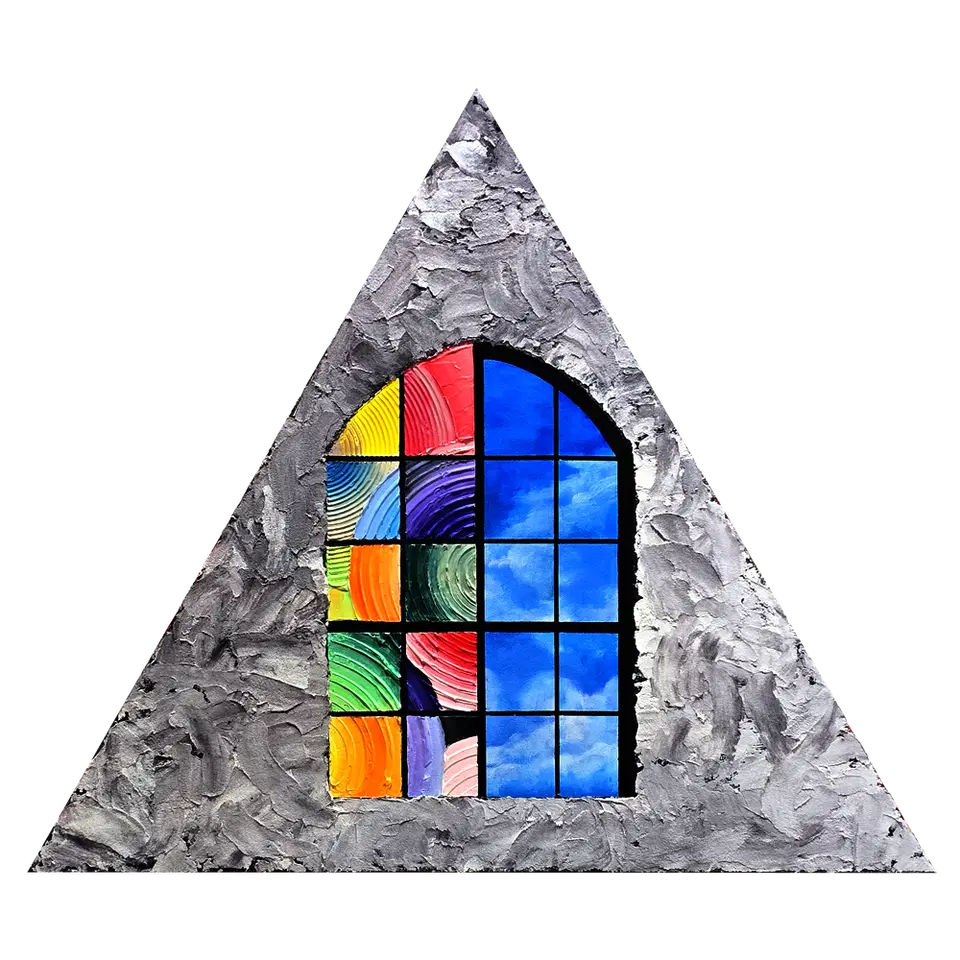
작가는 서로 다른 상징과 질감, 패턴을 병치하고 분절된 이미지를 겹쳐 놓는 방식으로 화면을 구성한다. 가면, 분할된 얼굴, 과장된 색채와 장식적 패턴은 현실을 꾸미기 위한 장치가 아니라, 경험을 통과 가능하게 만드는 심리적 필터로 작동한다. 이 세계는 긴장을 유도하기보다, 작가가 스스로의 감정을 안전하게 다루고 새로운 상상을 펼칠 수 있는 내면의 공간으로 읽힌다. 관람객은 무엇이 기억이고 무엇이 상상인지 구분하기보다, 감정이 다른 형식으로 변환되며 견딜 수 있는 상태로 재구성되는 과정을 경험하게 된다.written by ARTISTY, ⓒ ARTISTY Inc.
Kim Ryeong Ah’s work revisits the psychological traces left by unfamiliar experiences within spaces reconstructed through imagination. Here, fantasy does not function as the opposite of reality, but rather as a mechanism that transforms emotion into a form that can be endured. The recurring figure of the girl operates less as a portrait of a singular self and more as a psychological avatar through which shifting emotional states—anxiety, defense, curiosity, and desire—surface and intersect. Viewers are initially drawn to the fairy-tale-like familiarity of the imagery, yet soon sense a subtle unease, recognizing that the surface is not entirely comfortable.
The artist constructs her compositions by juxtaposing disparate symbols, textures, and patterns, layering fragmented images across the picture plane. Masks, divided faces, exaggerated colors, and ornamental motifs do not function as decorative devices, but as psychological filters that make experience bearable. This world is read not as a site that heightens tension, but as an inner space where the artist can safely engage her emotions and extend the possibilities of imagination. Rather than distinguishing what belongs to memory and what belongs to fantasy, viewers encounter the process through which emotion is transformed into another form—reconfigured into a state that can be sustained and held.